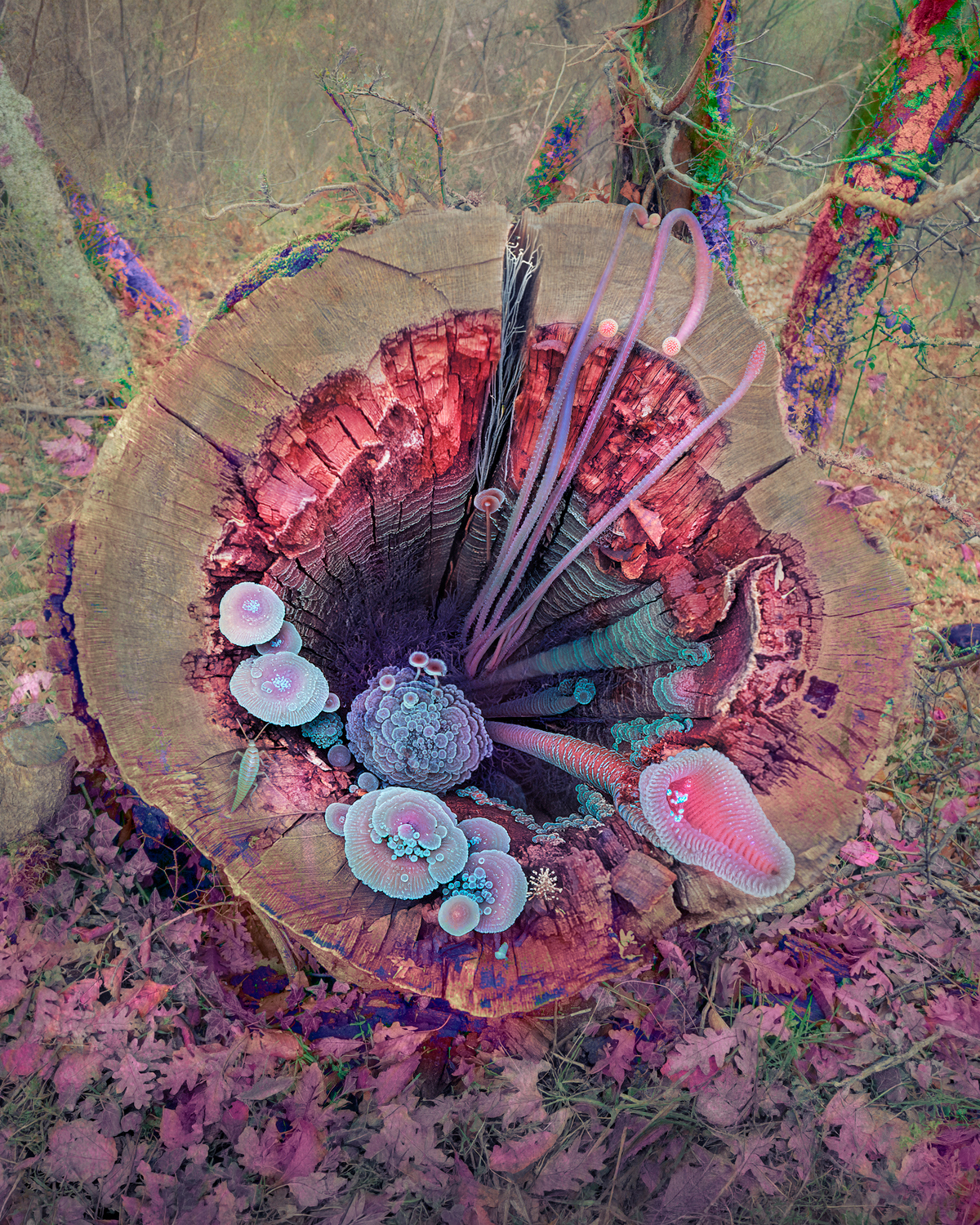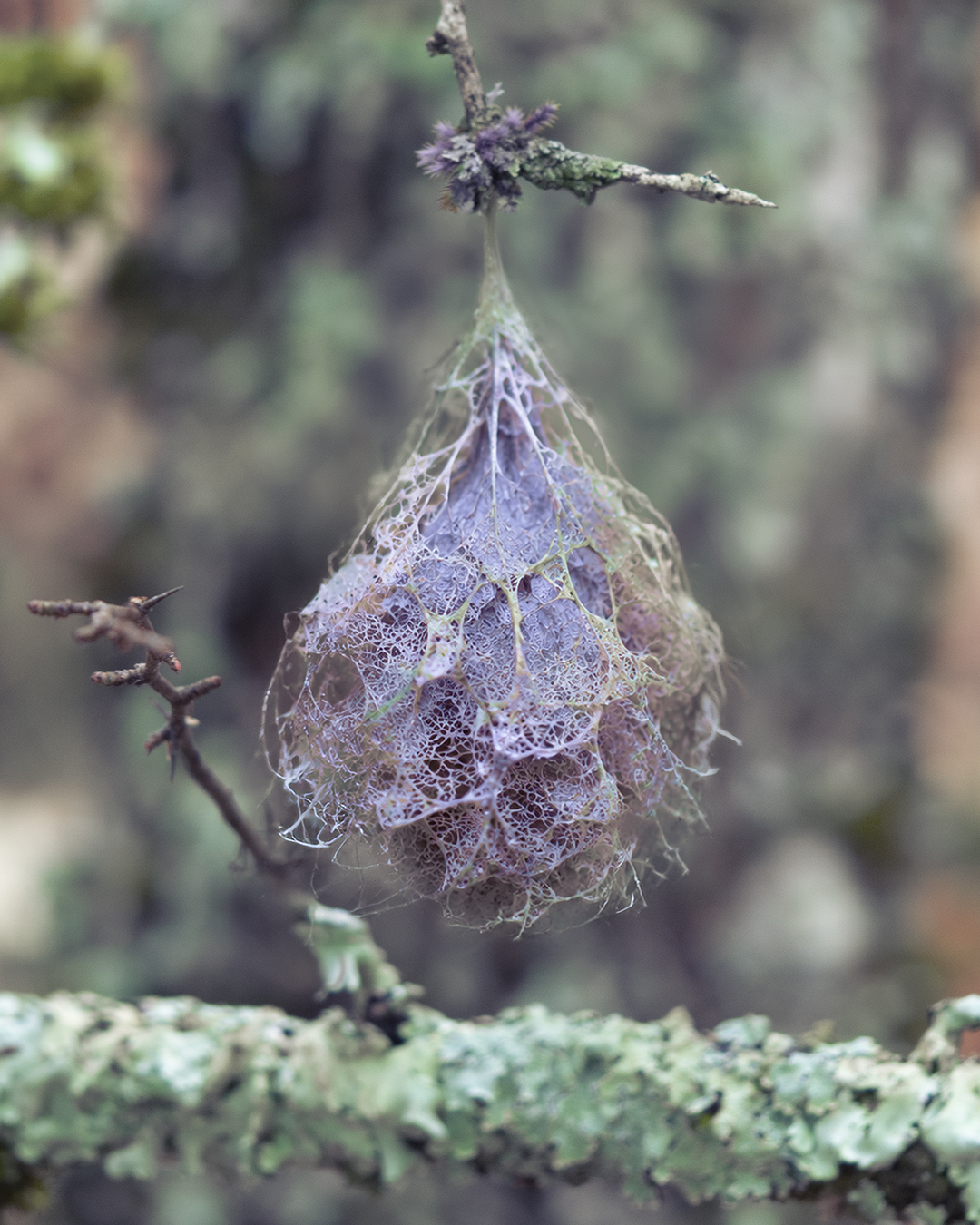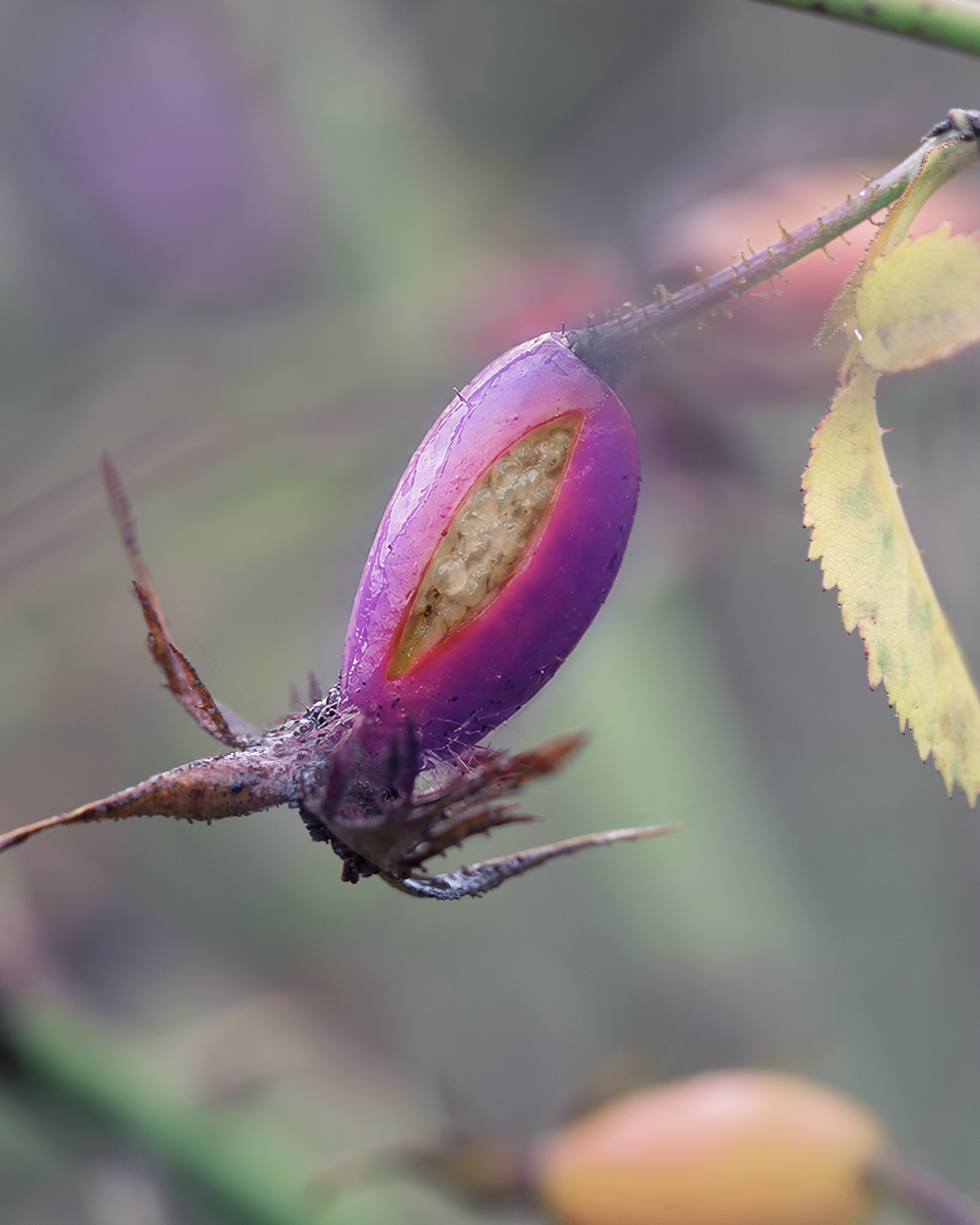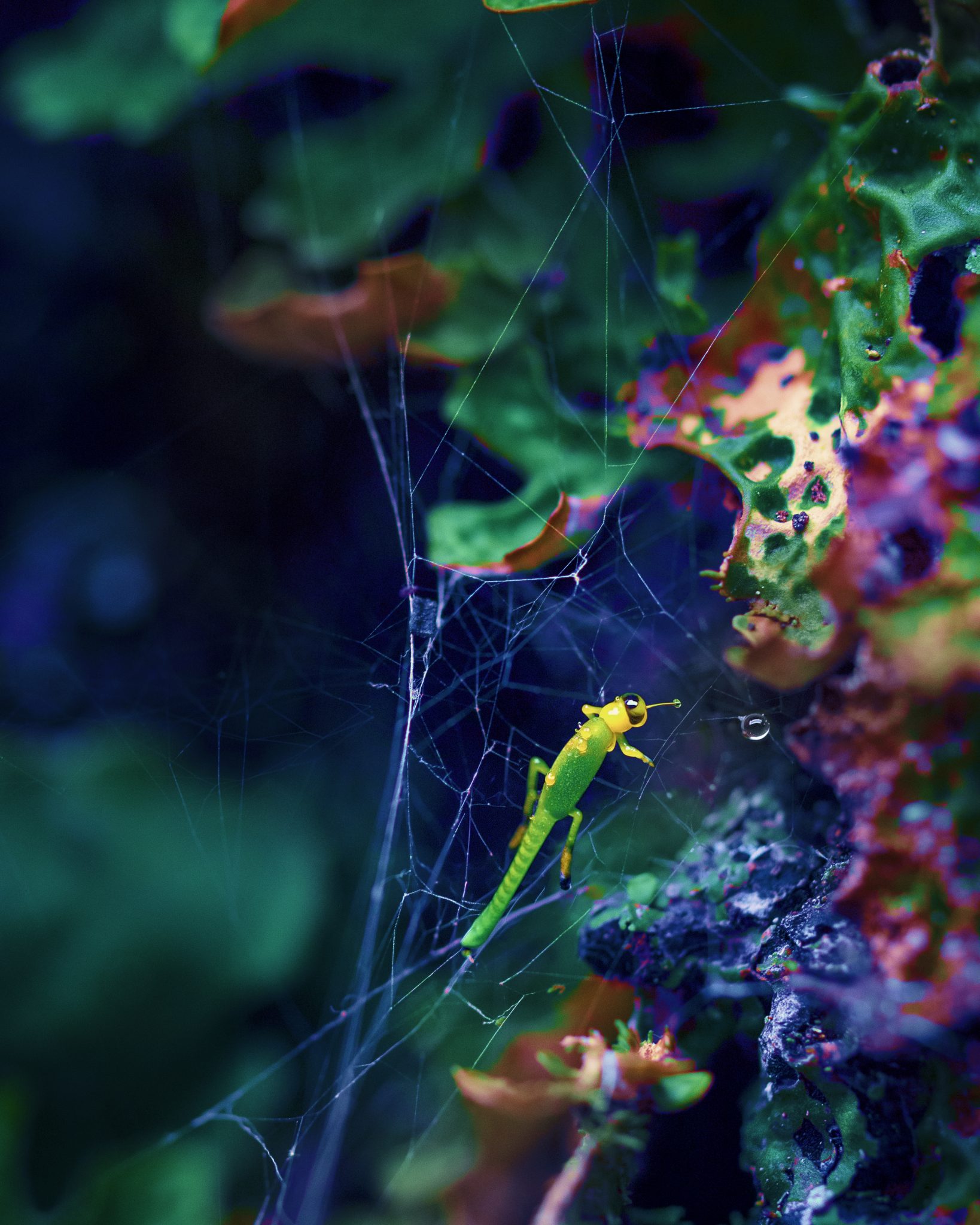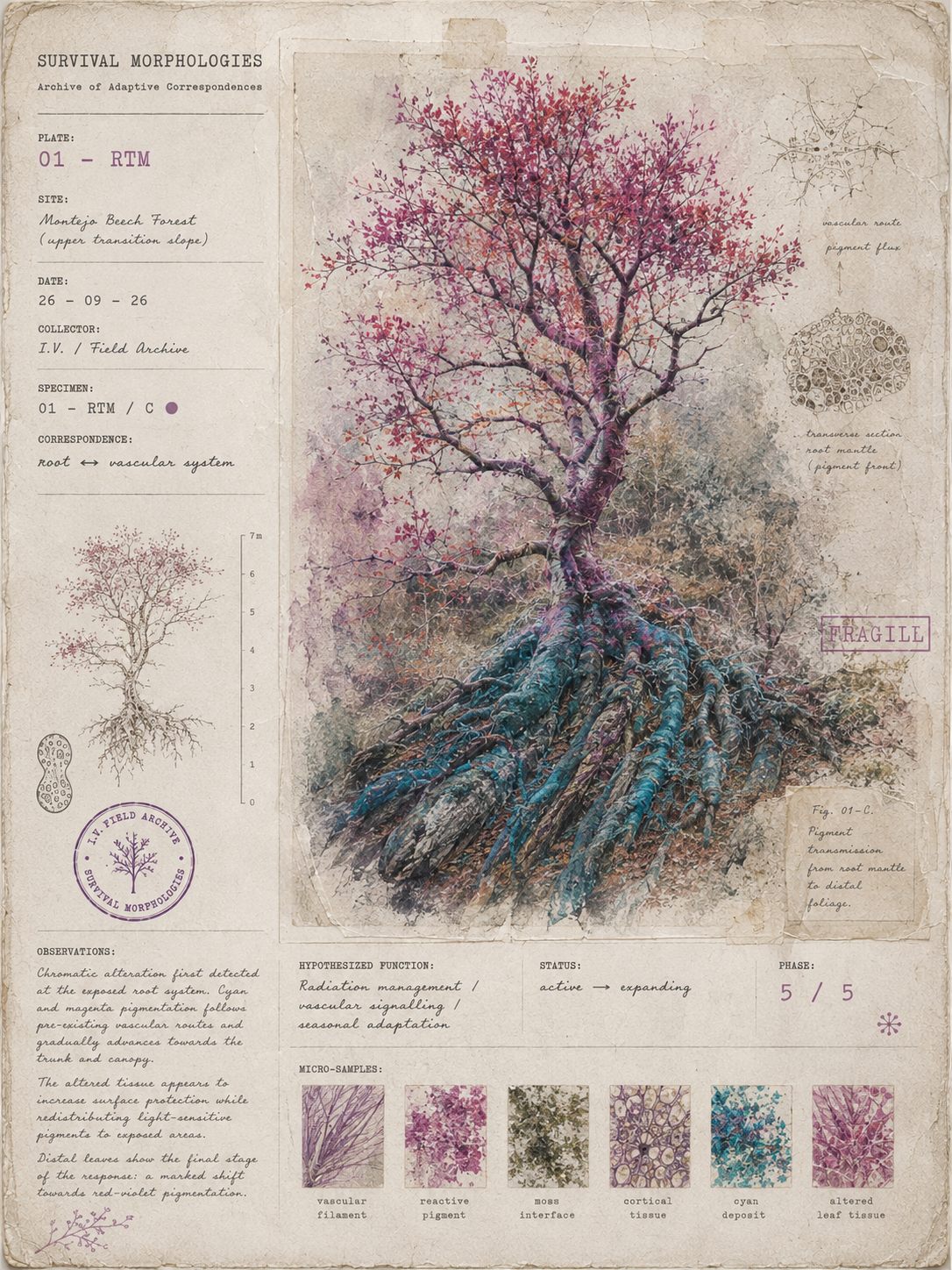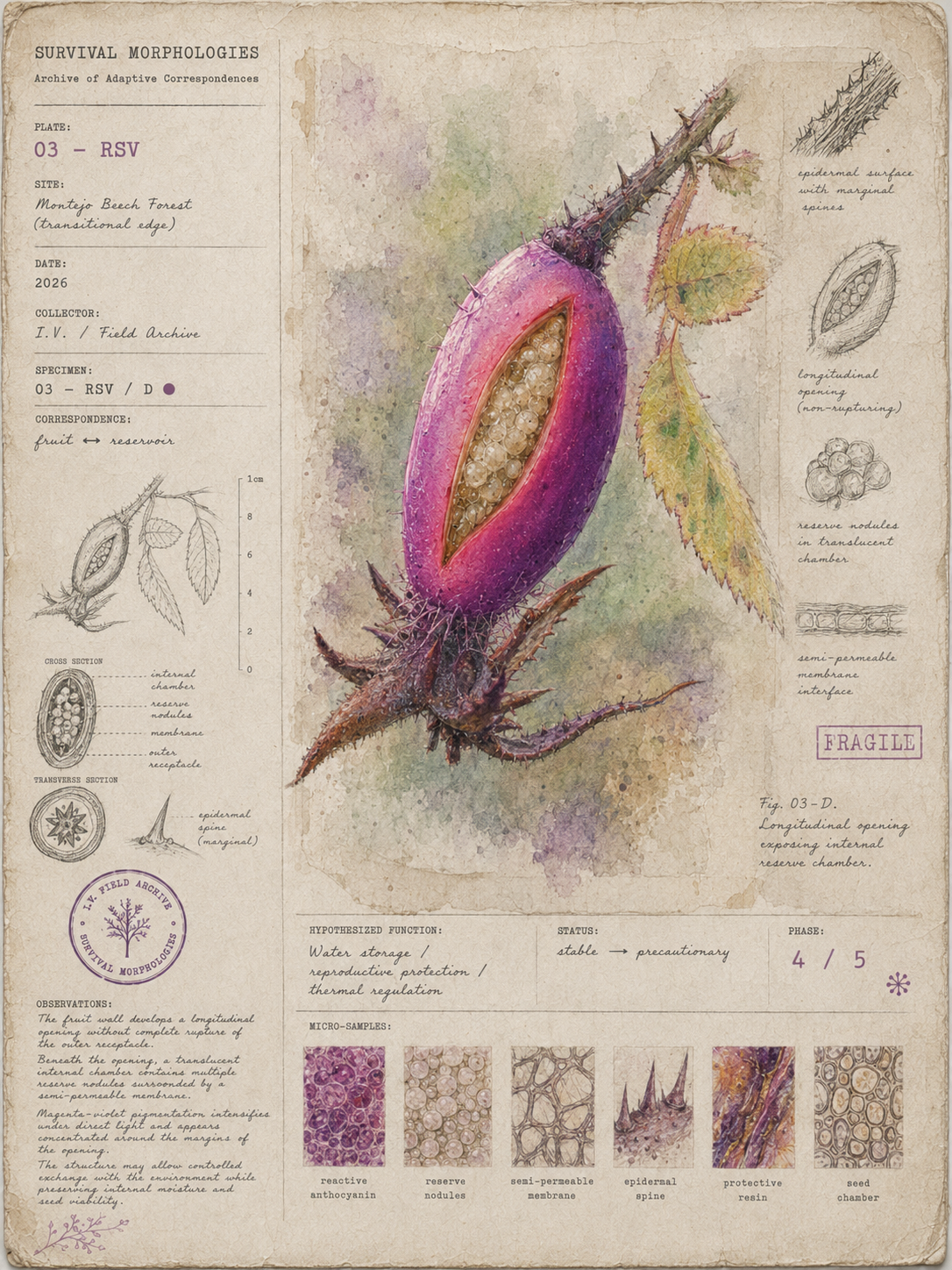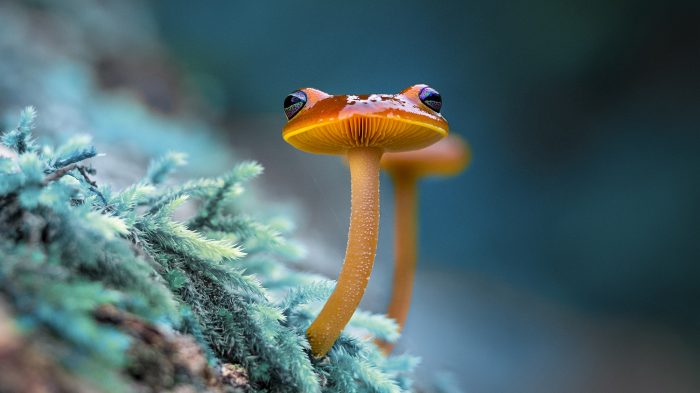
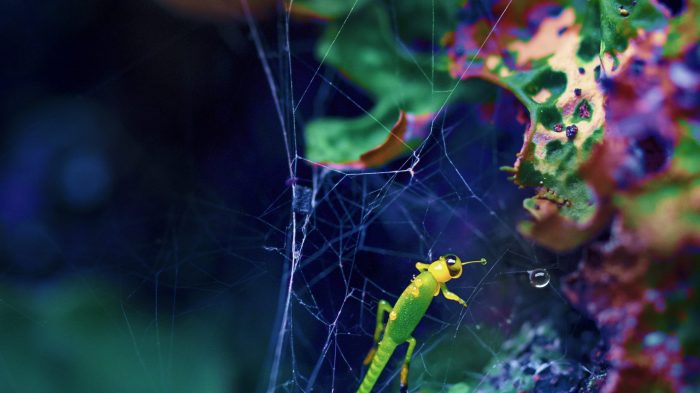
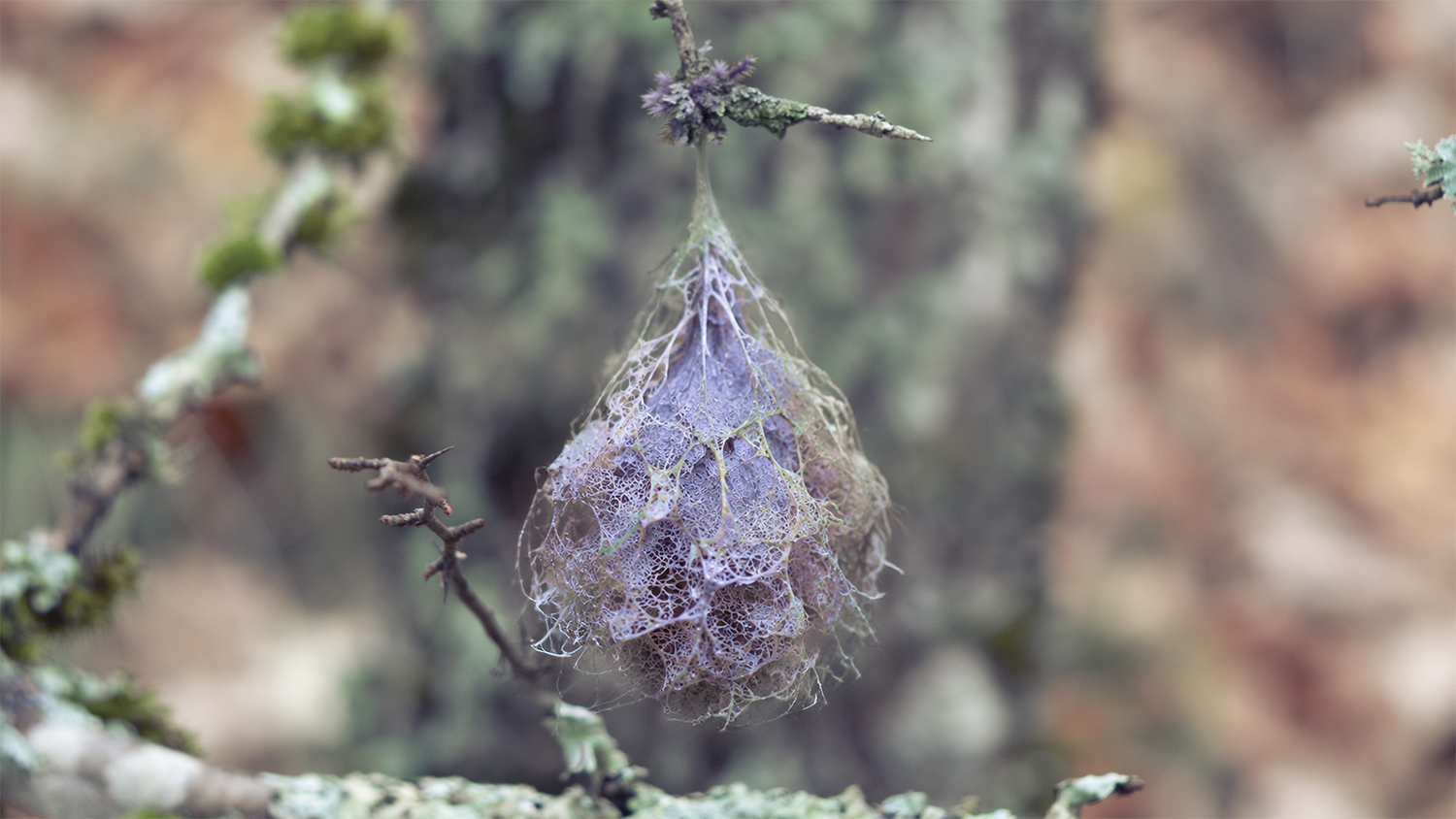
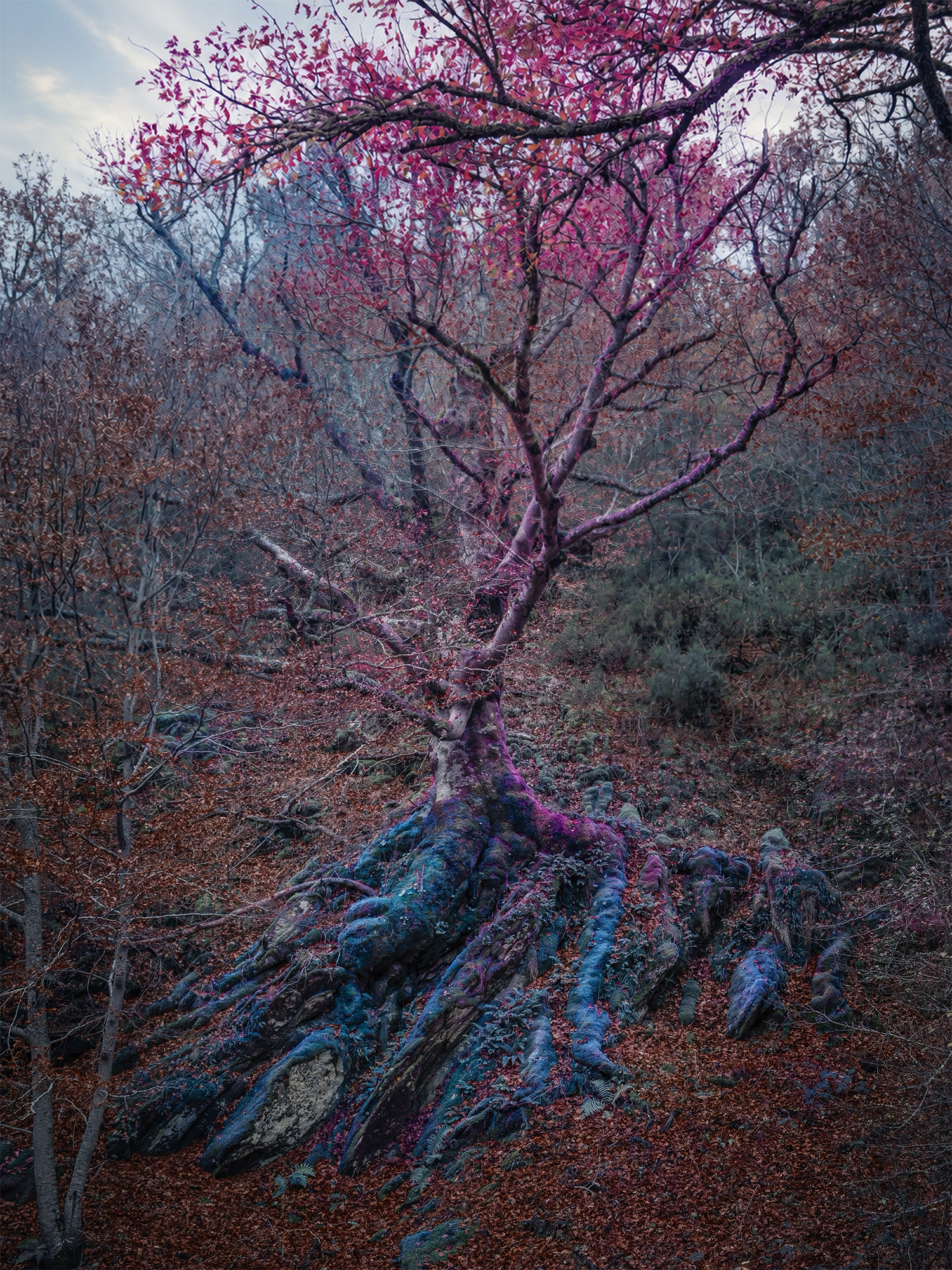
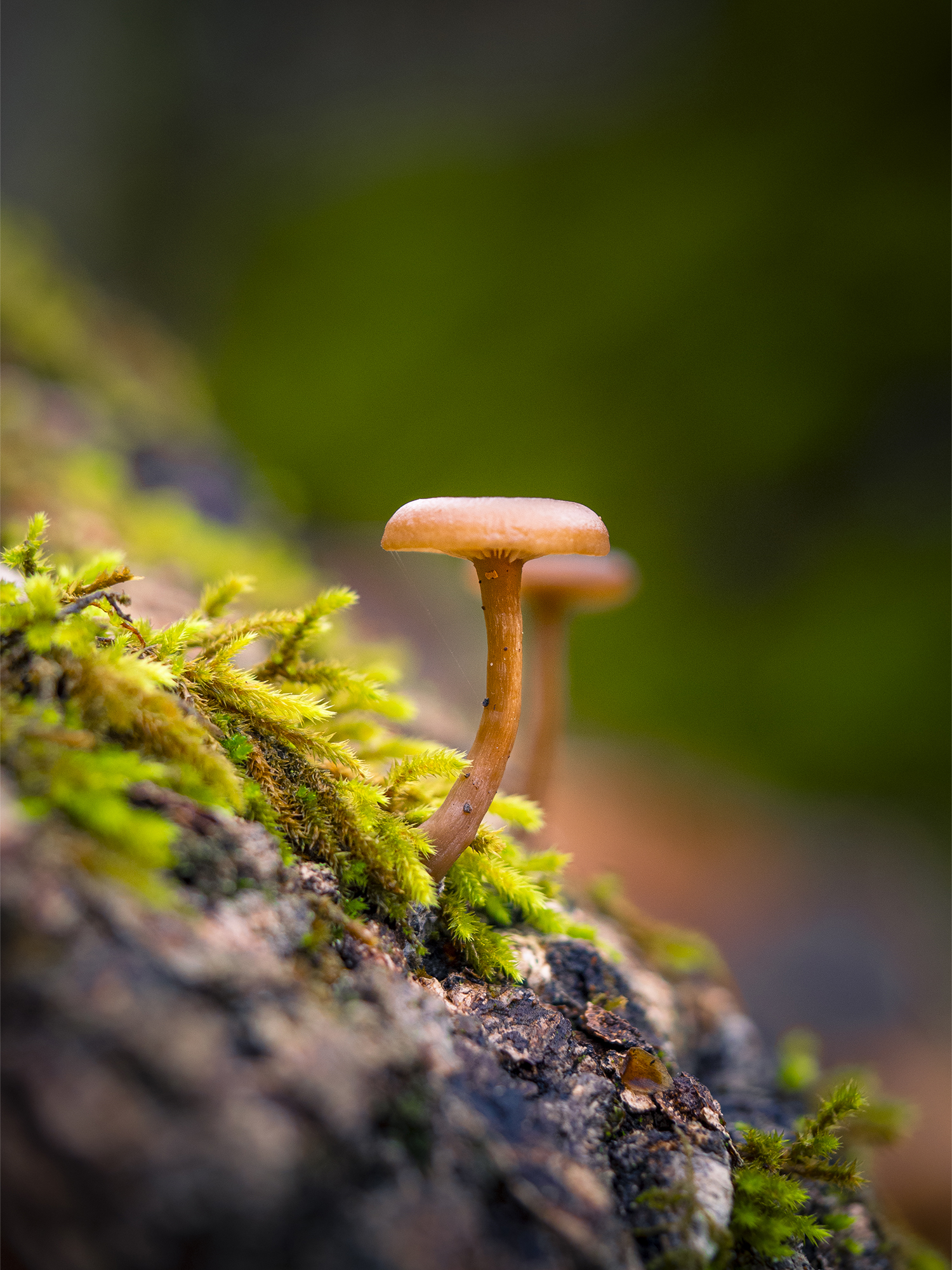
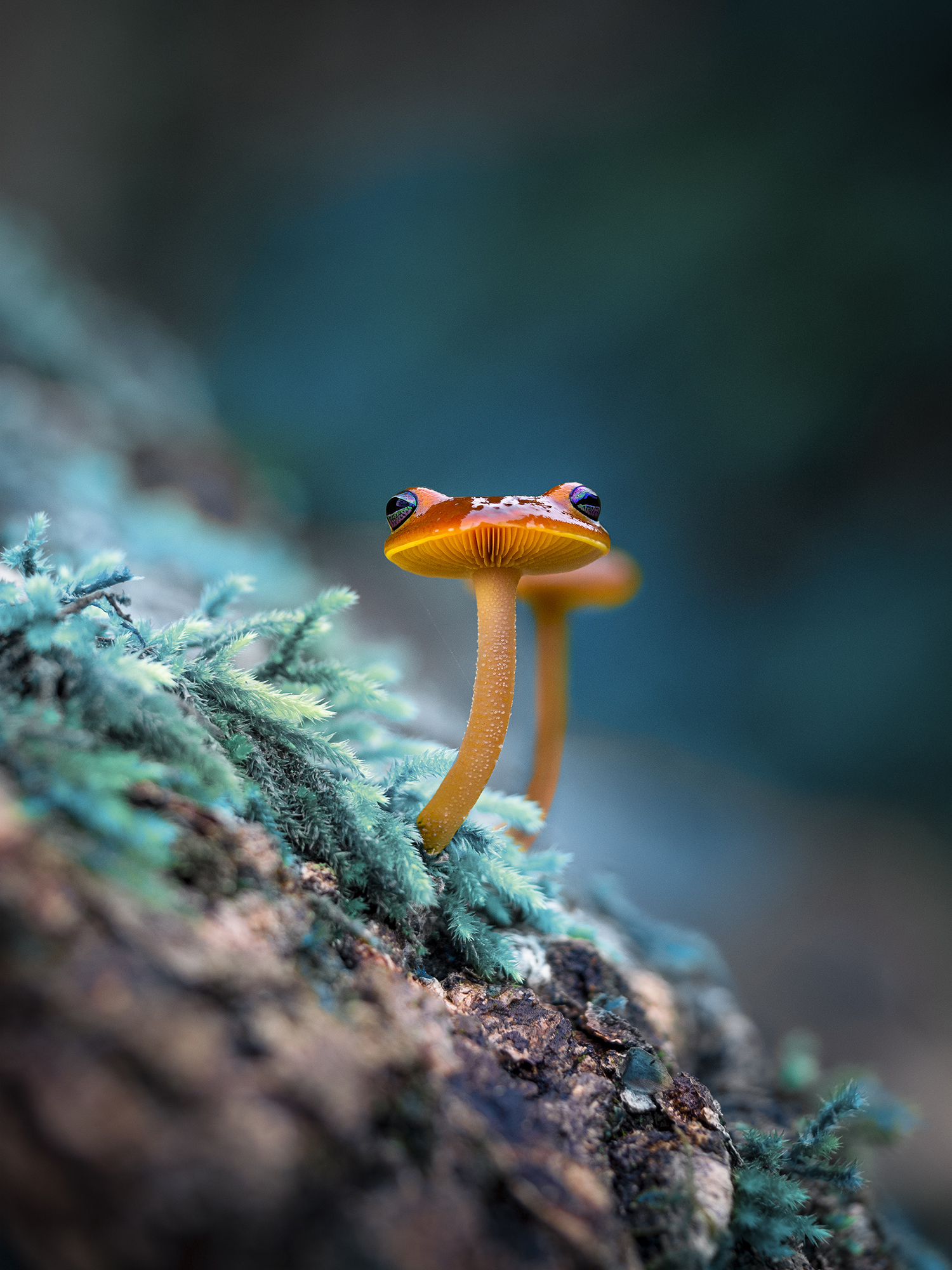

Survival Morphologies explores how living systems might alter their appearance, anatomy and behaviour in response to environmental pressure.
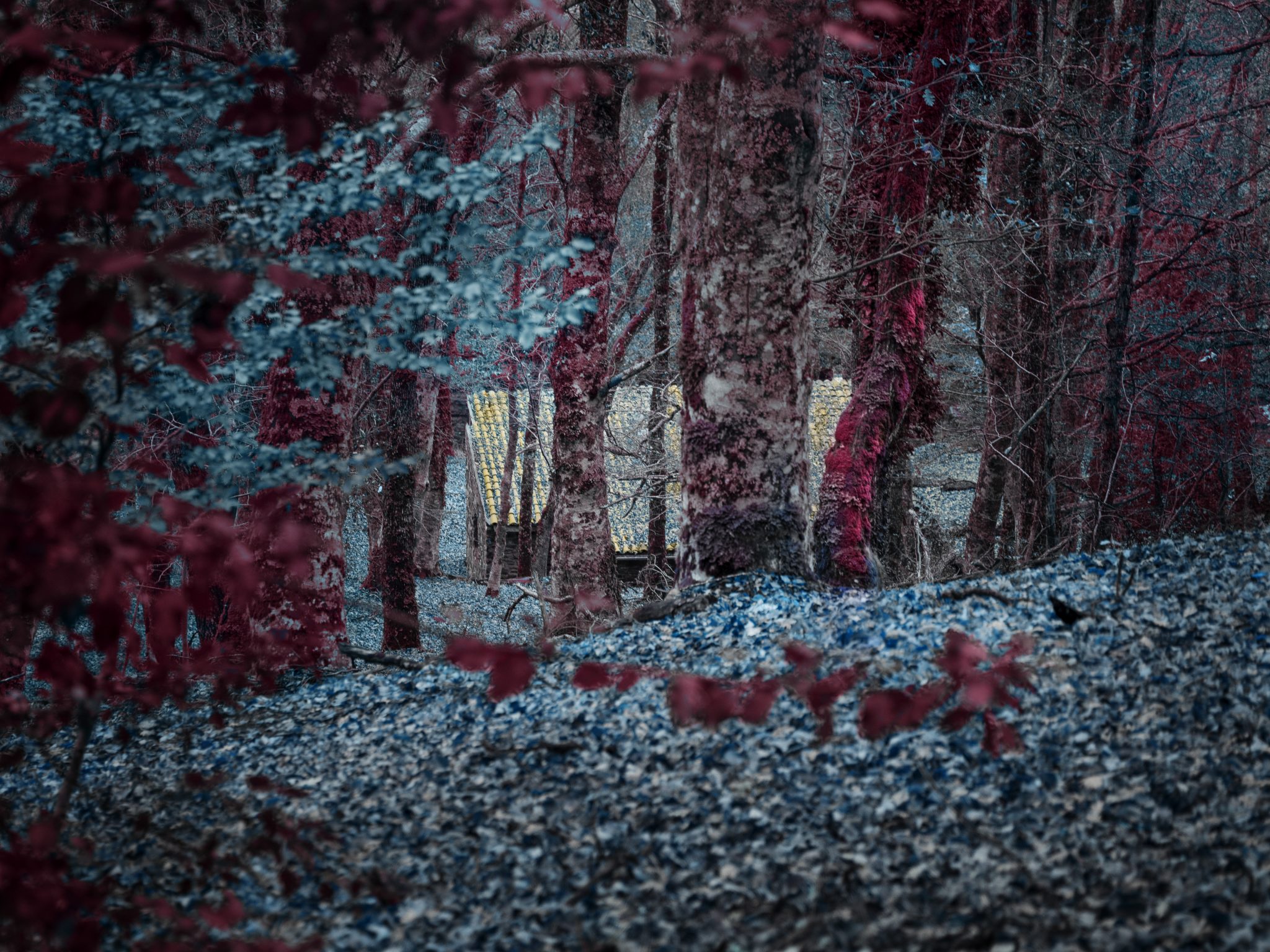
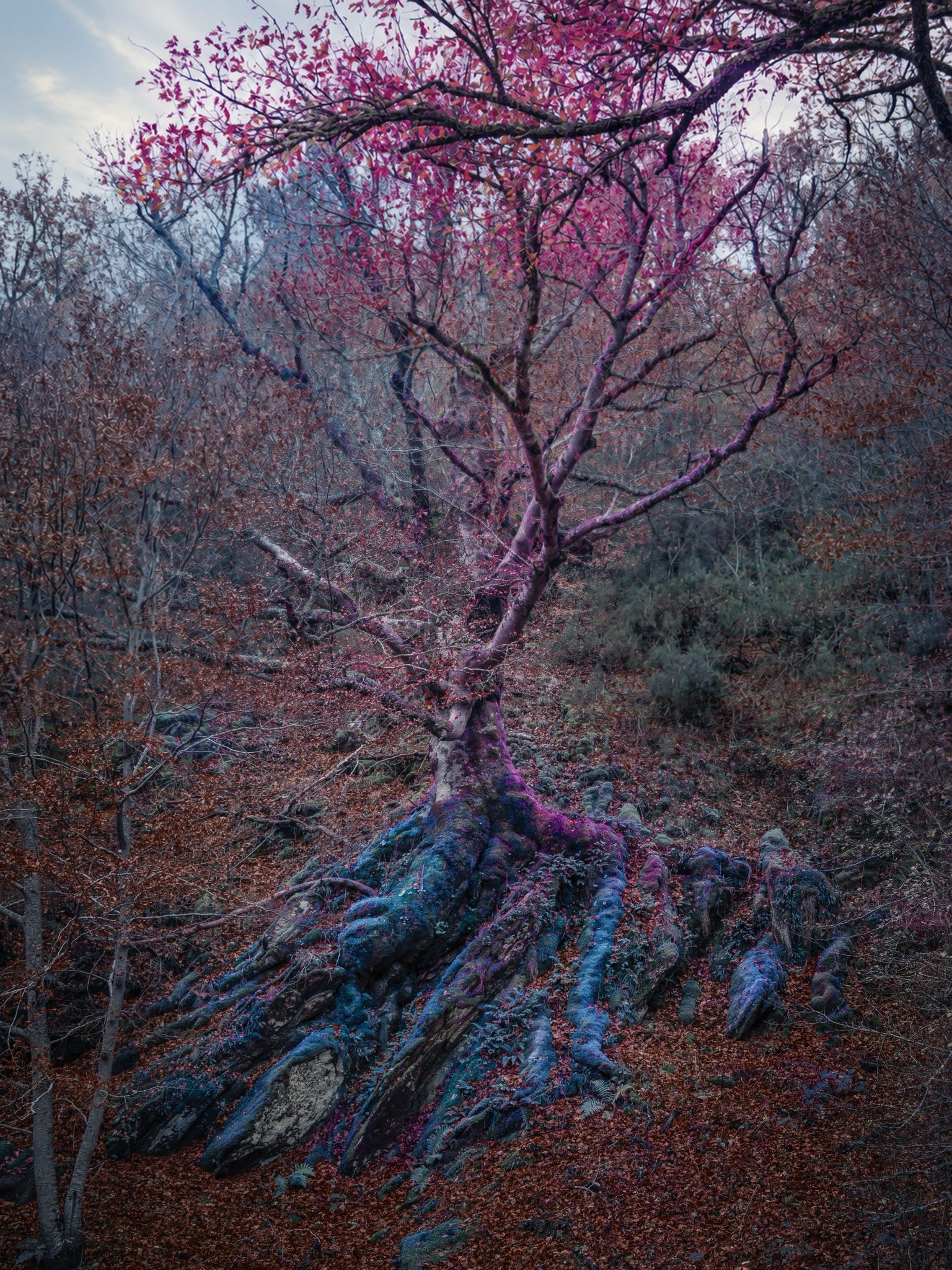
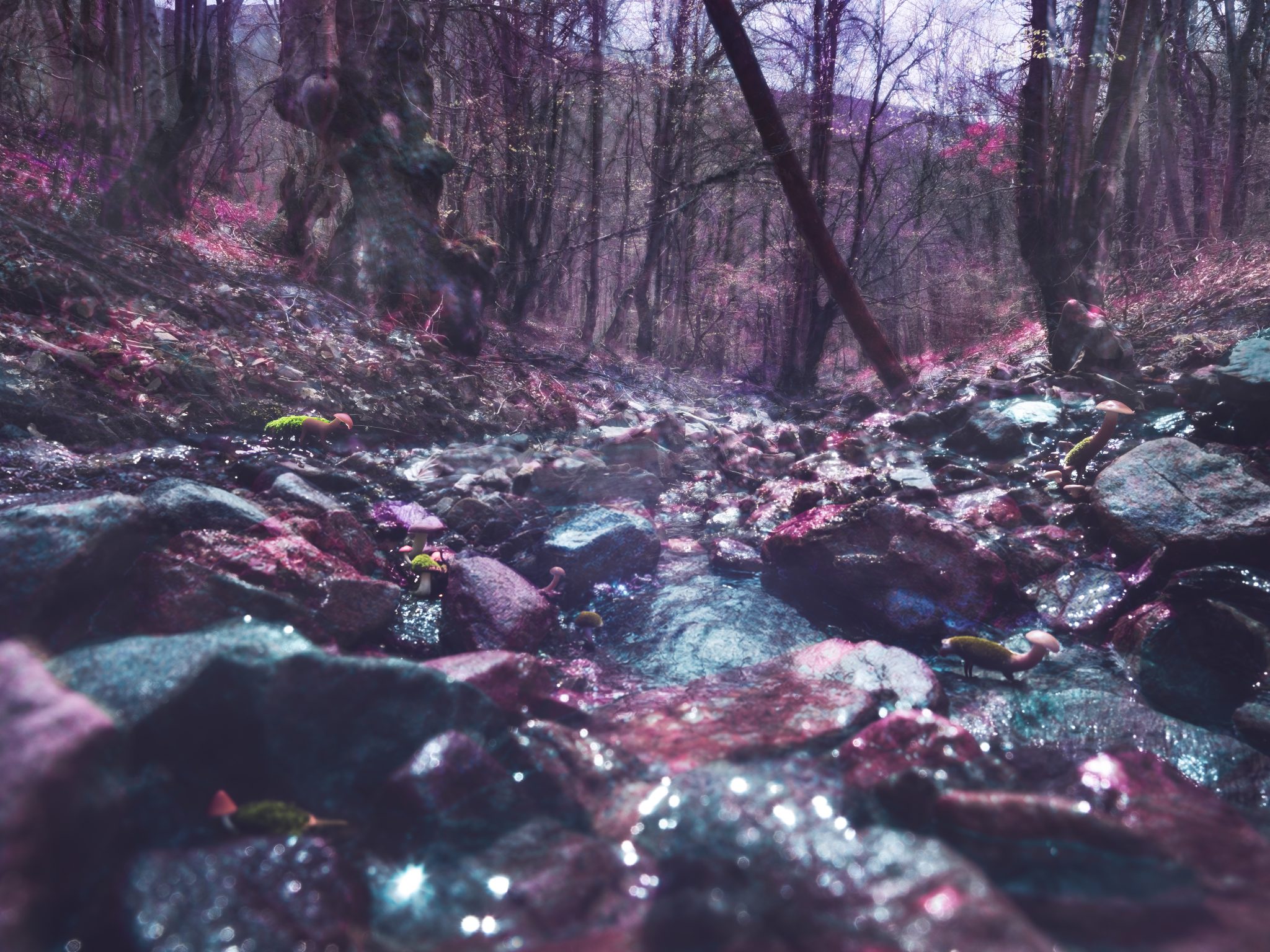
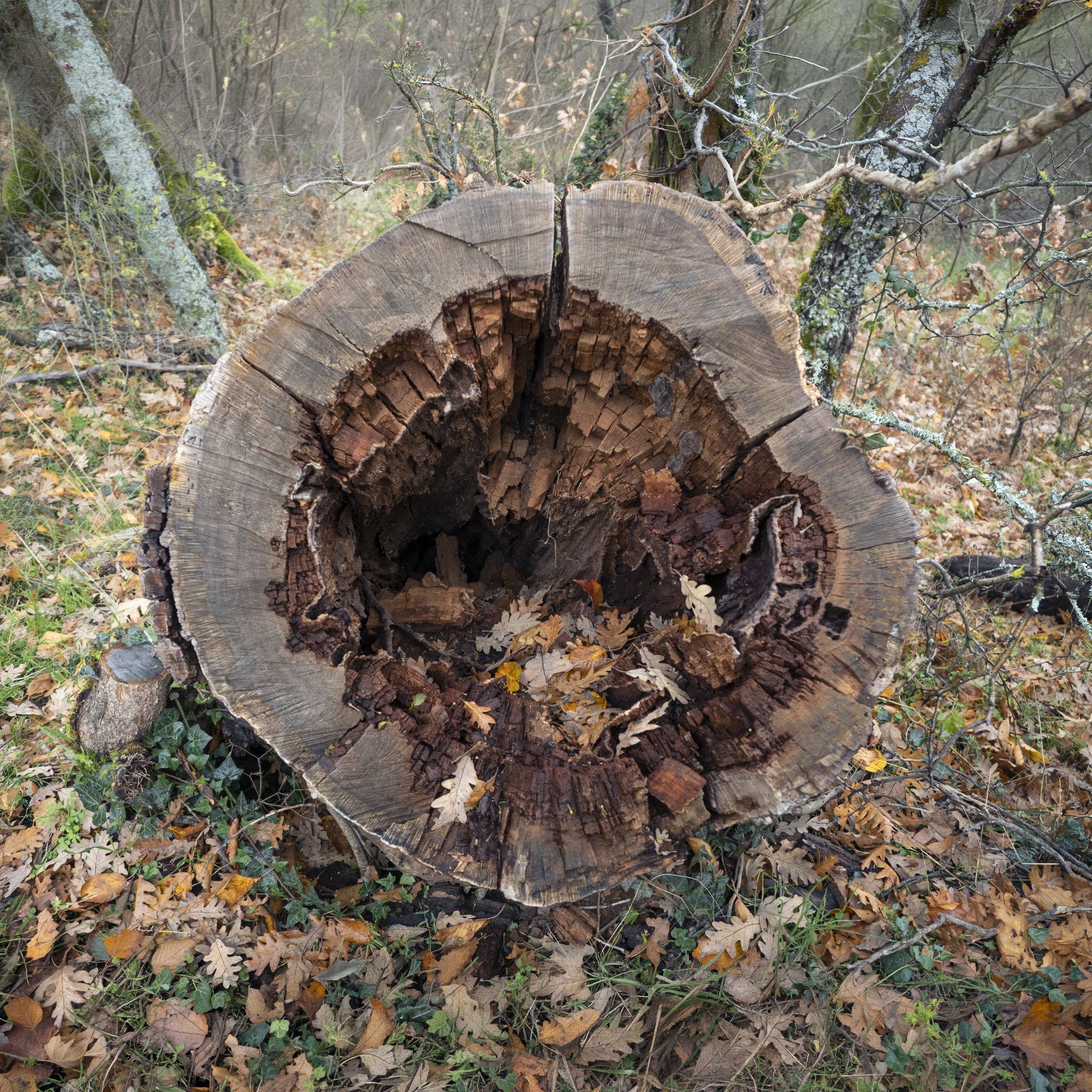
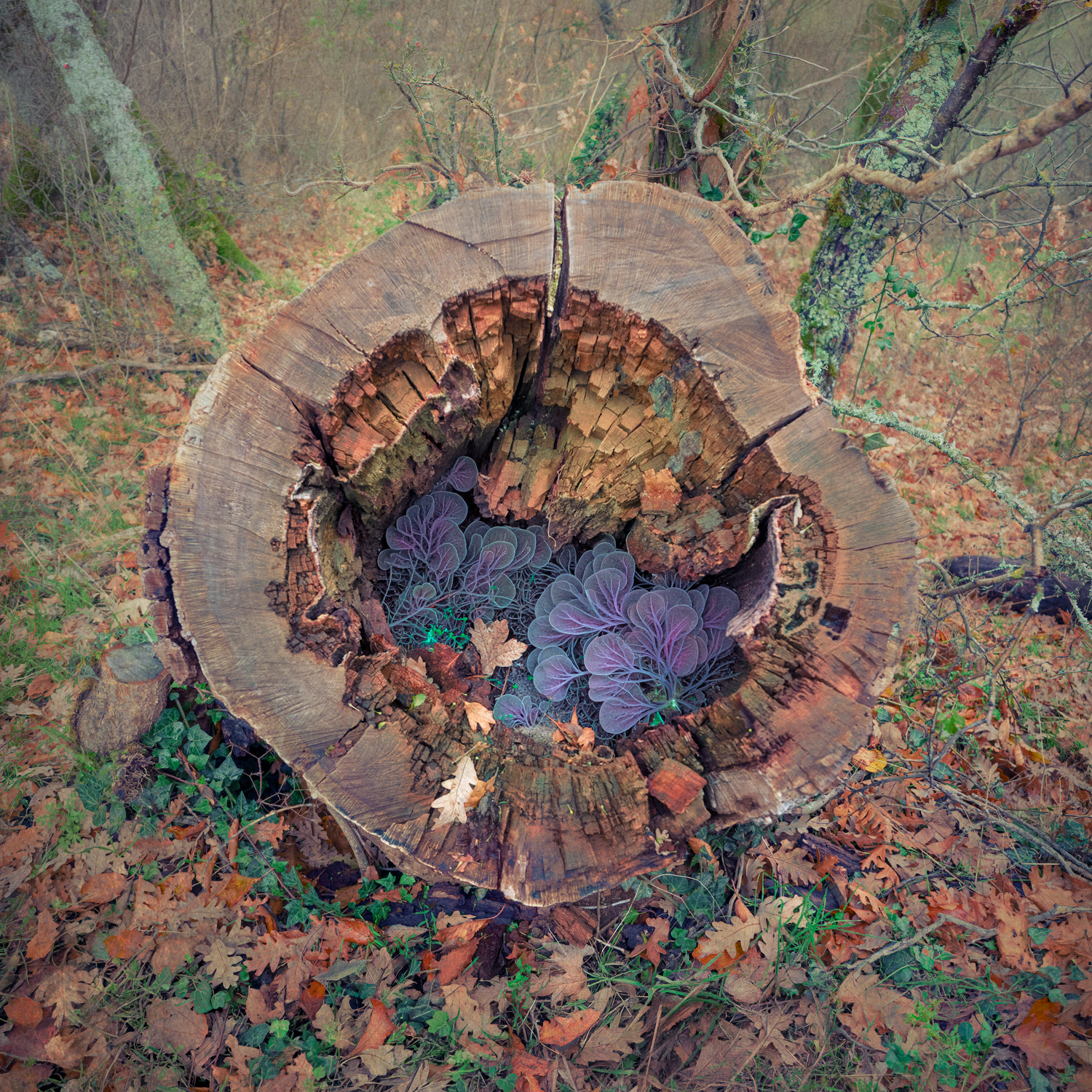
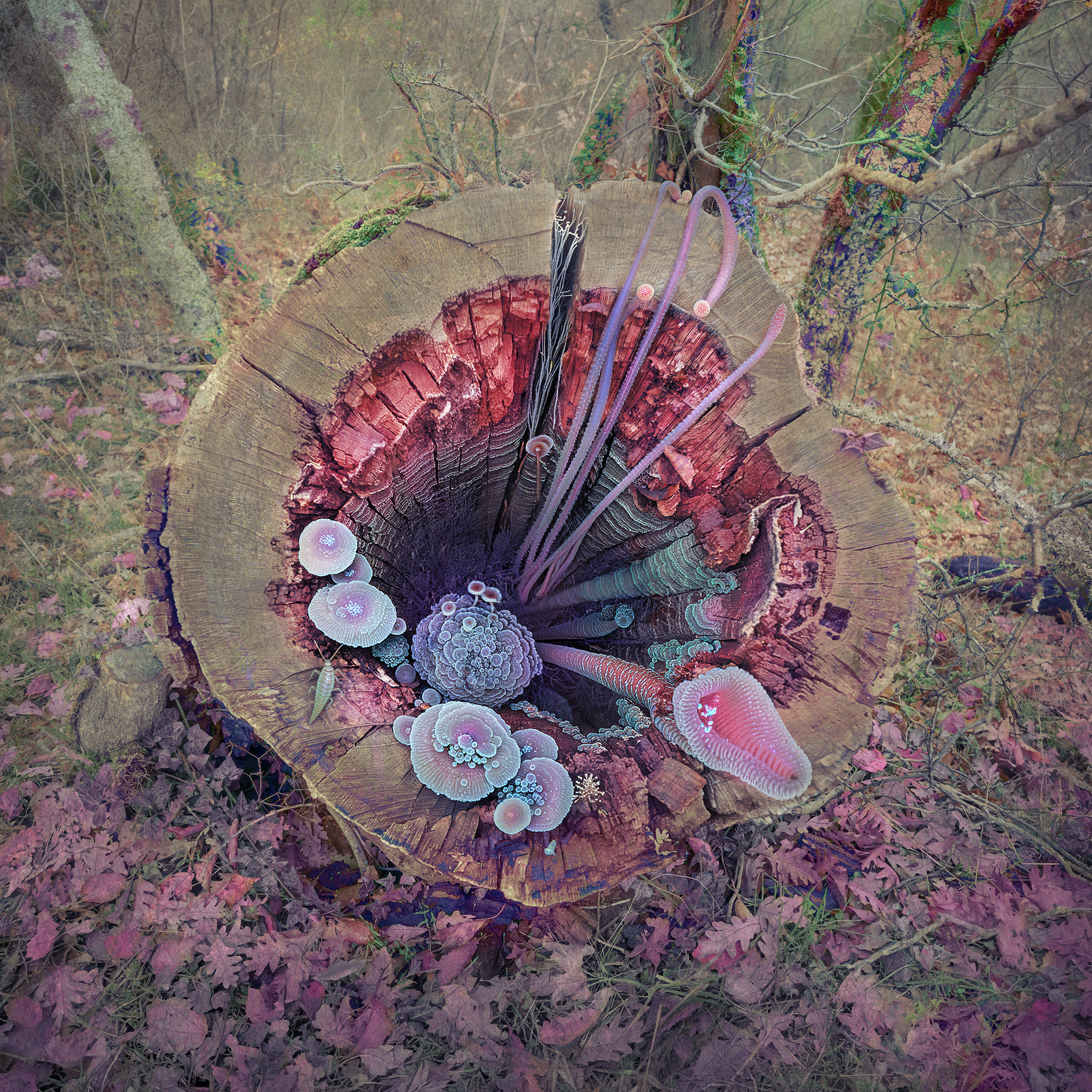
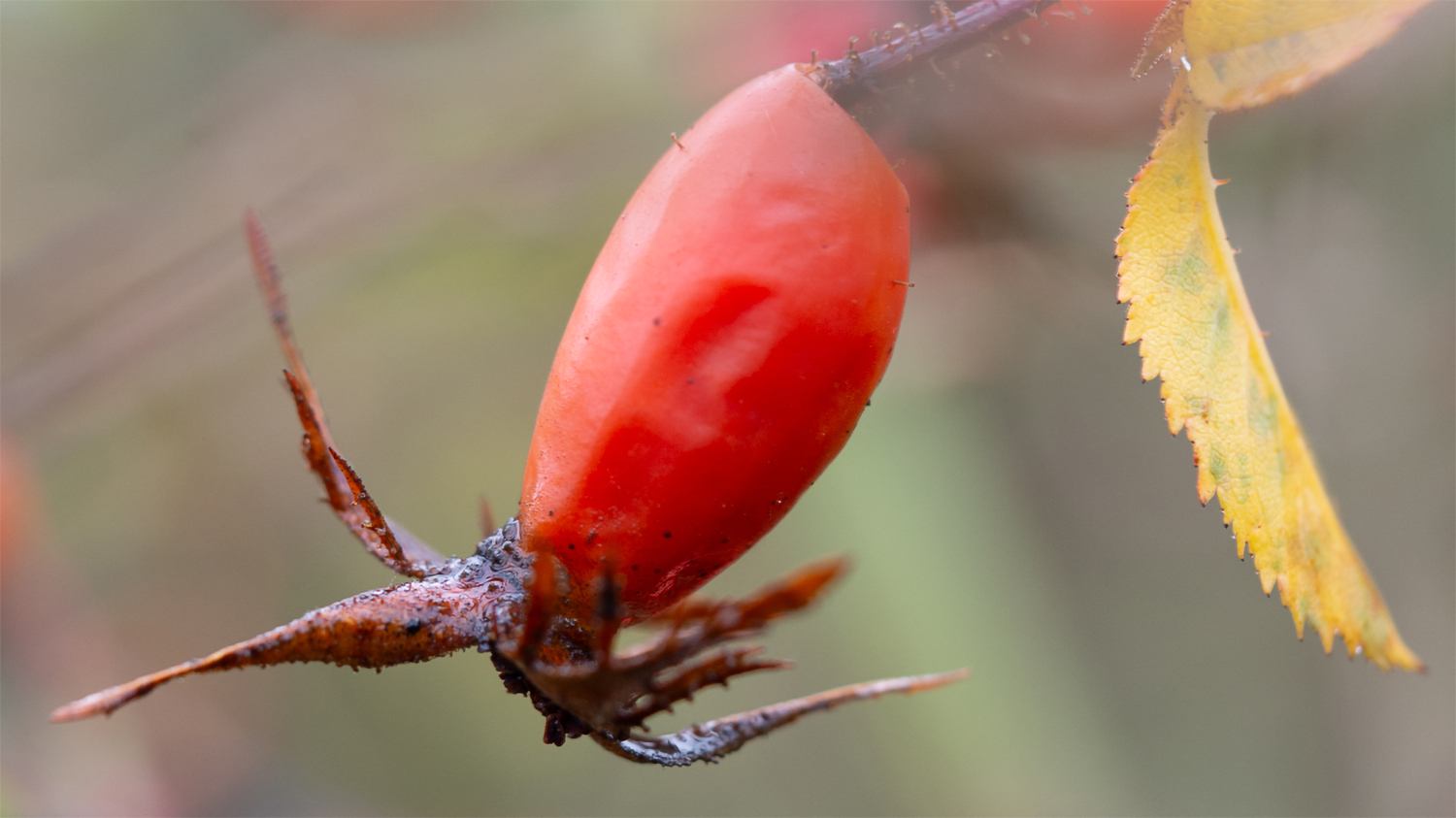
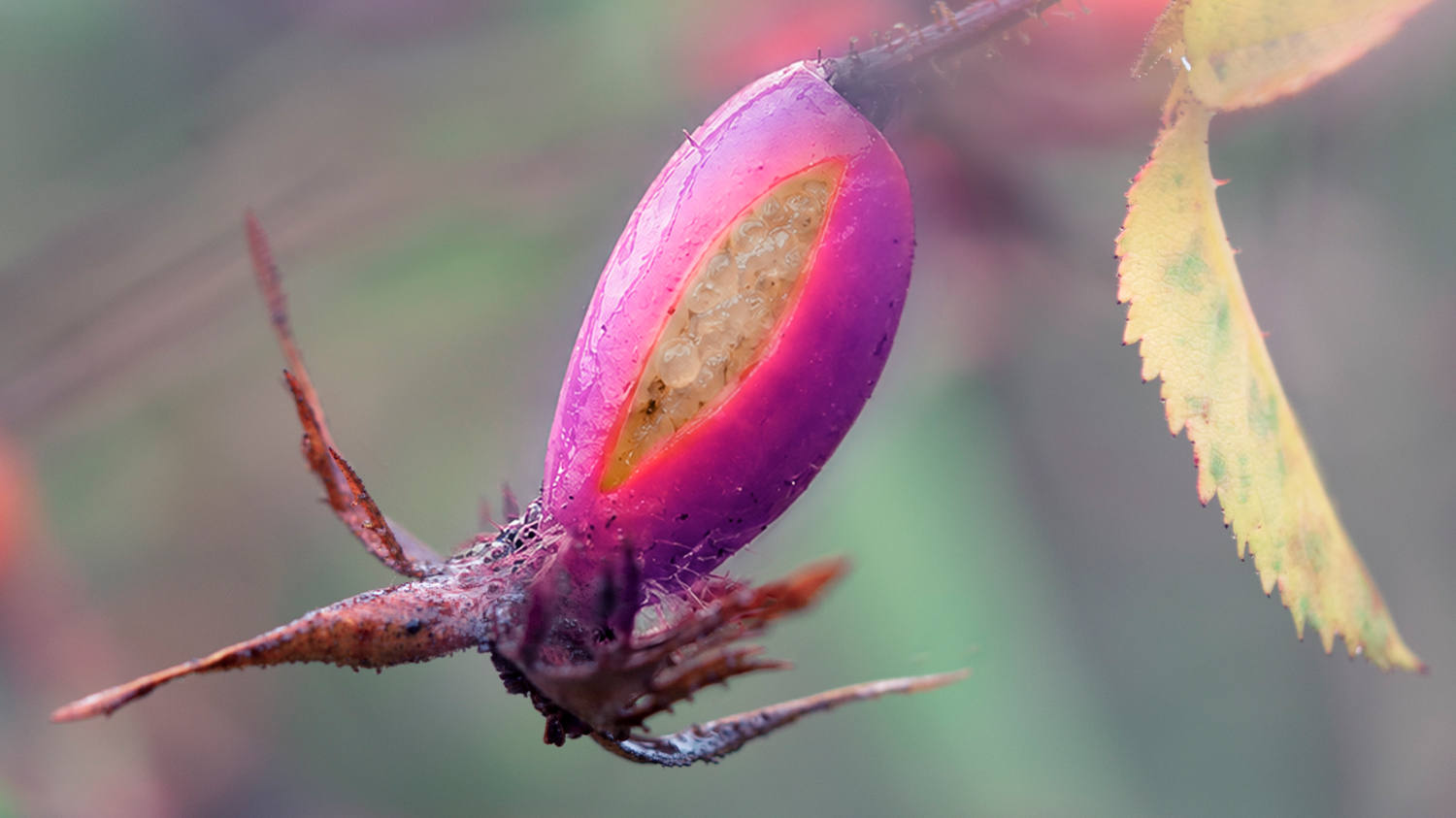
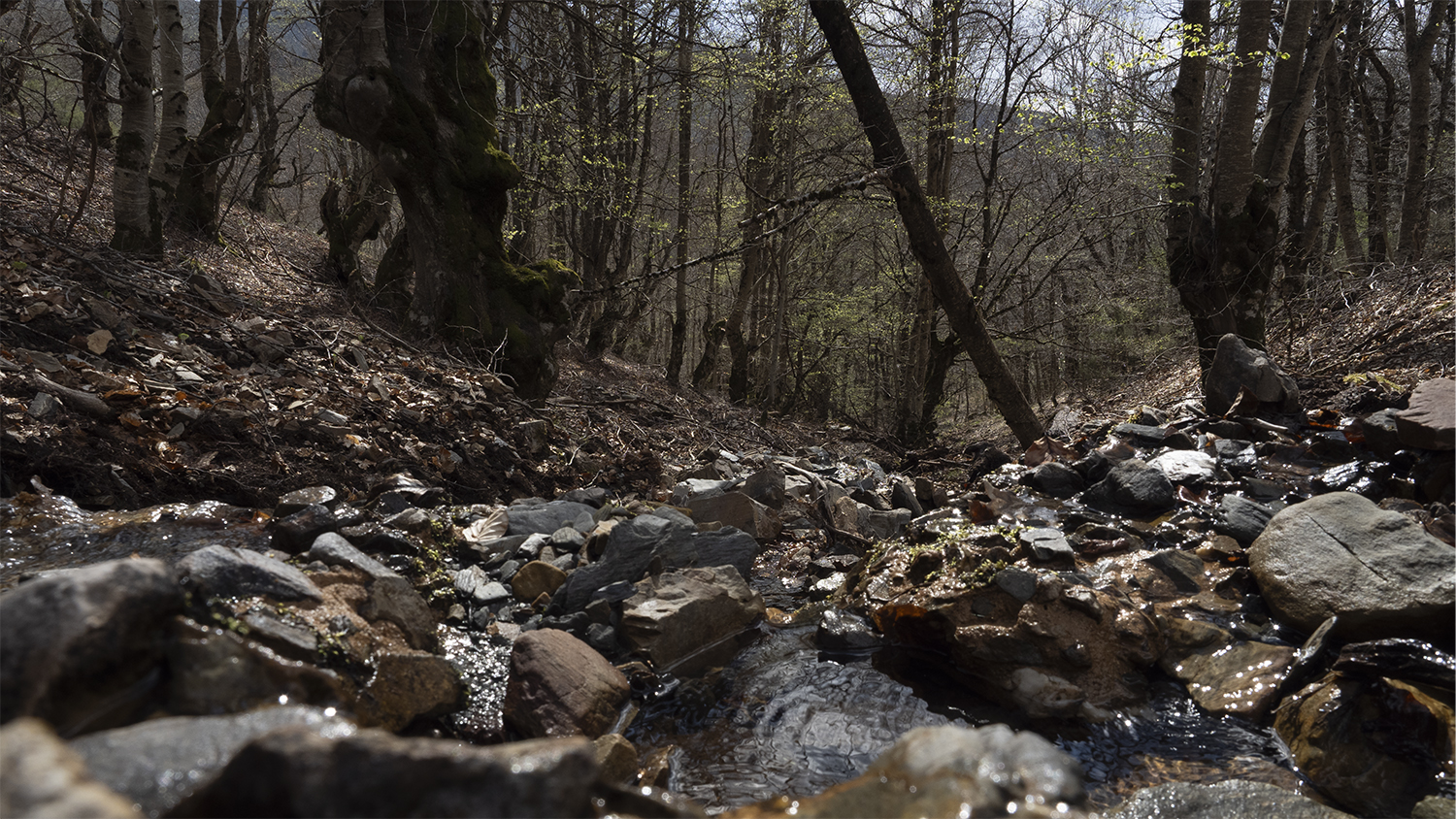
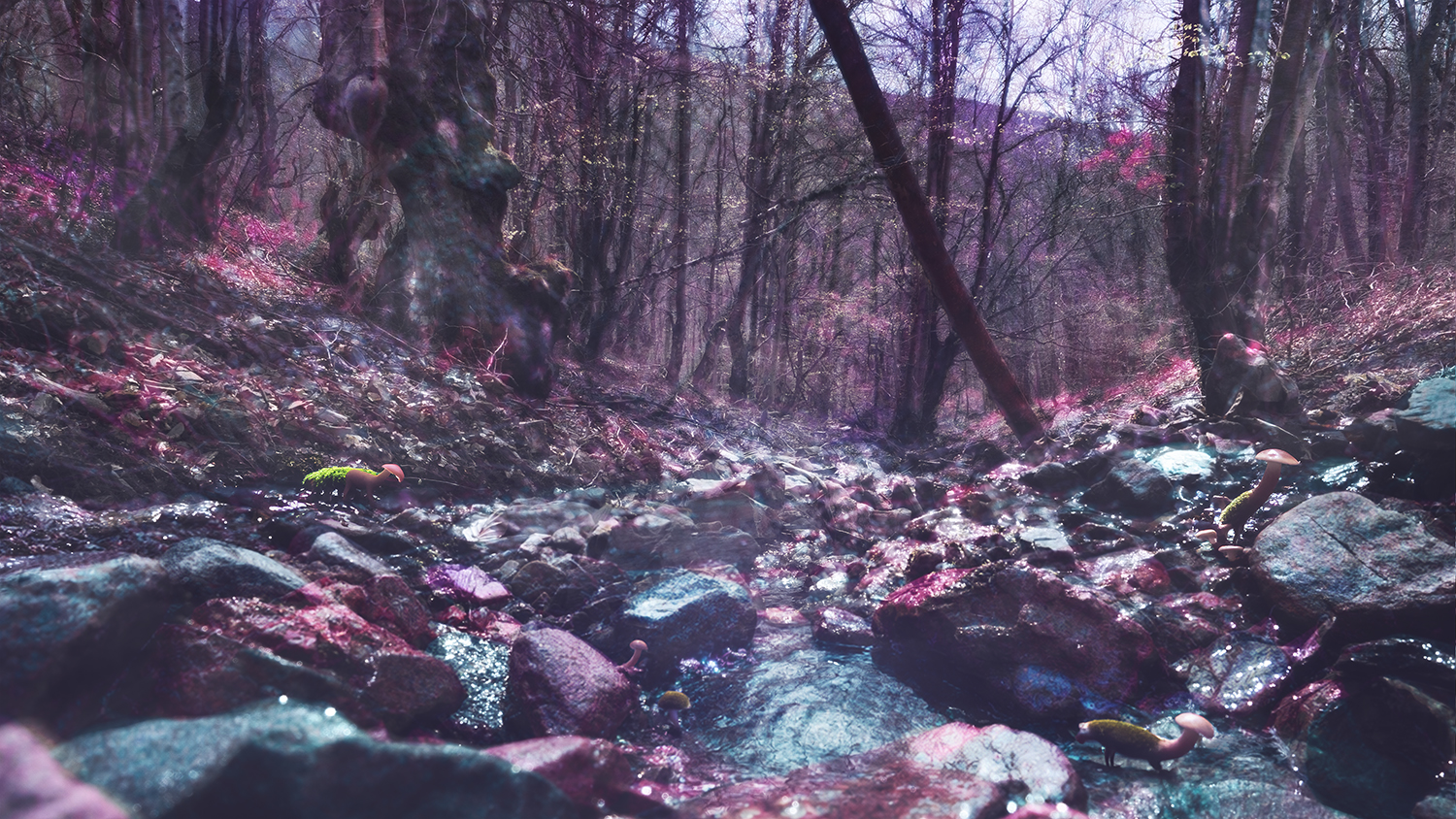
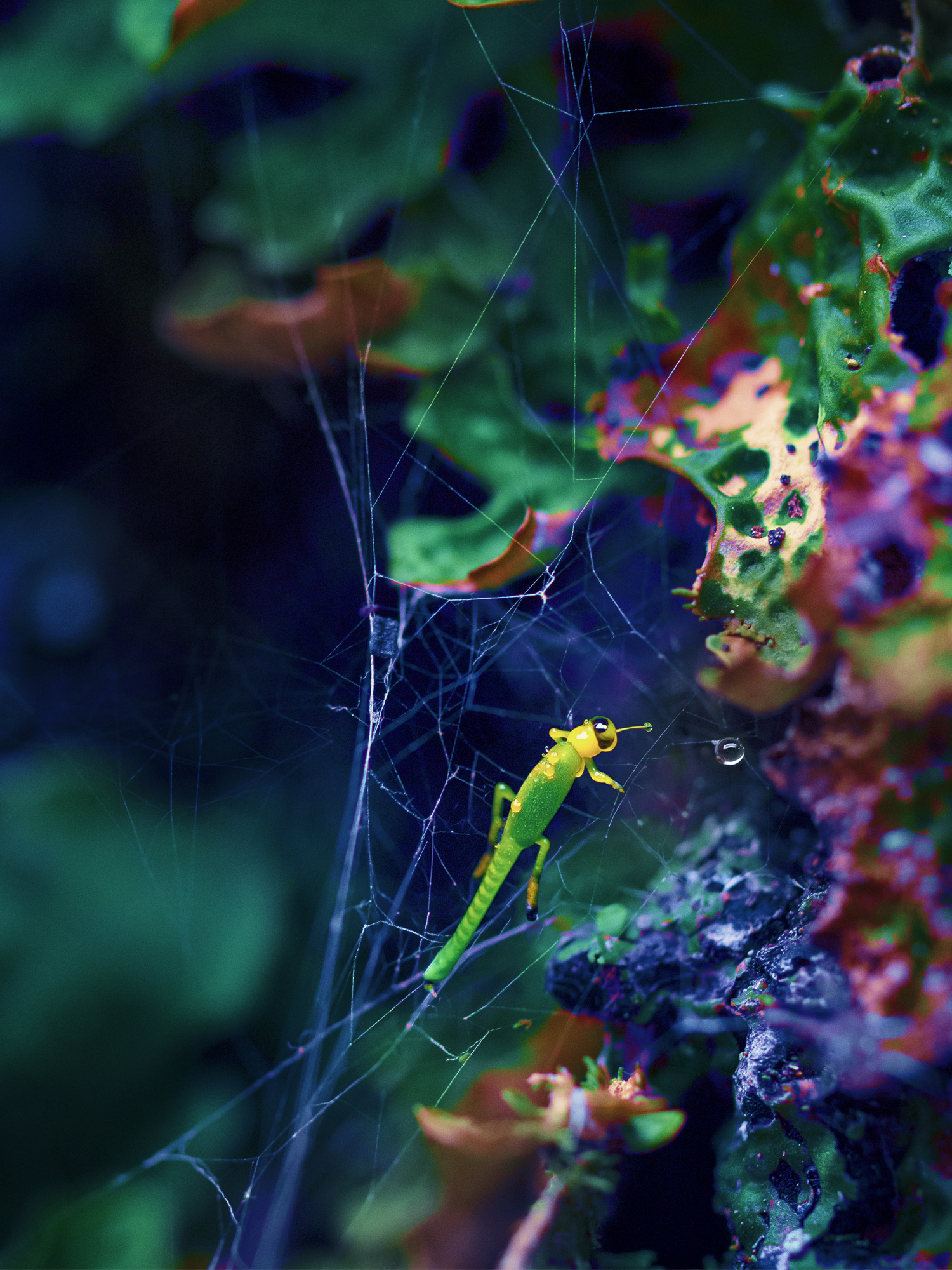
The project begins with photographs made in real forests and of existing botanical forms. Through digital compositing, colour transformation and image construction, these observations are gradually displaced into speculative territory: fruits develop unfamiliar reproductive structures, protective membranes appear, root systems acquire new functions and entire habitats begin to show signs of adaptation.
The resulting forms are fictional, but their logic is grounded in strategies already found in nature: protection, signalling, storage, reproduction, seasonal change and physiological response.
Survival Morphologies begins with a simple premise: when an environment falls out of balance, life does not simply disappear; it first tries out new forms.
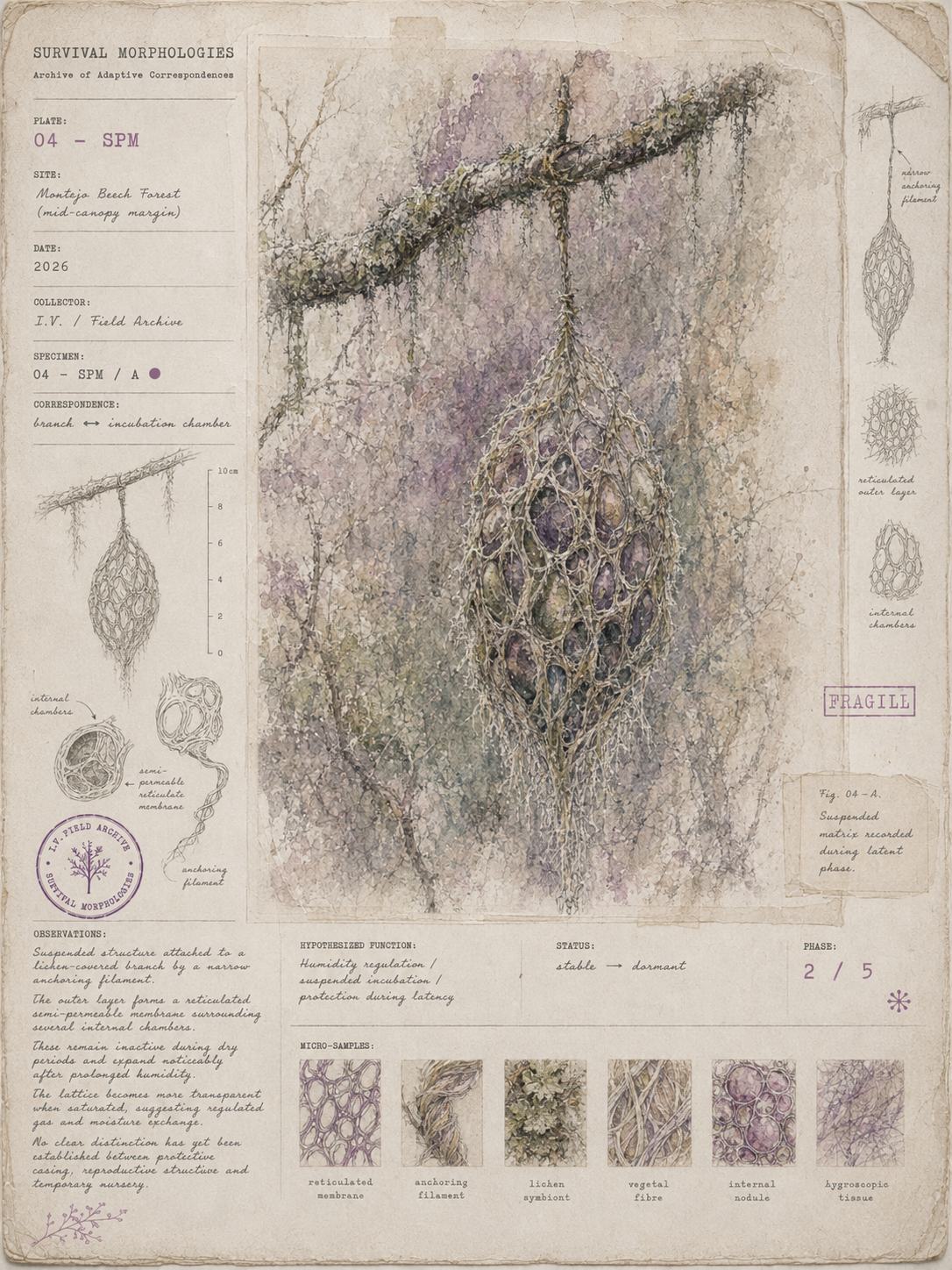
From this premise, the project imagines a group of liminal species encountered in real forests and transformed through image-making processes. Fruits opening like sensory organs, reticulated membranes, suspended bodies, networks resembling veins or spiderwebs, roots spreading like nervous systems, and landscapes showing signs of internal reorganisation form part of an open, long-term speculative archive of adaptation.
The images begin with observation and continue into the realm of possibility. They do not depict a self-contained fantasy world, but a natural world that responds, mutates and adjusts to its surroundings. Each work reads as partial evidence of a biology still taking shape, as though the forest were quietly developing new organs, behaviours and forms of cooperation between species.
The visual language of field notebooks and archival records does not attempt to imitate science literally. Instead, it draws on its methods and rituals: naming, recording, classifying, comparing. Yet the more these forms are documented, the harder they become to contain within a stable category.
Survival Morphologies inhabits this uncertain territory, where close observation and visual invention become equally necessary.
Ultimately, the project is about adaptation, fragility and persistence. It asks how life might change when its conditions change, and what new morphologies might appear not as anomalies, but as strategies for continuation.
Each image functions as a fragment of an evolving speculative field archive.
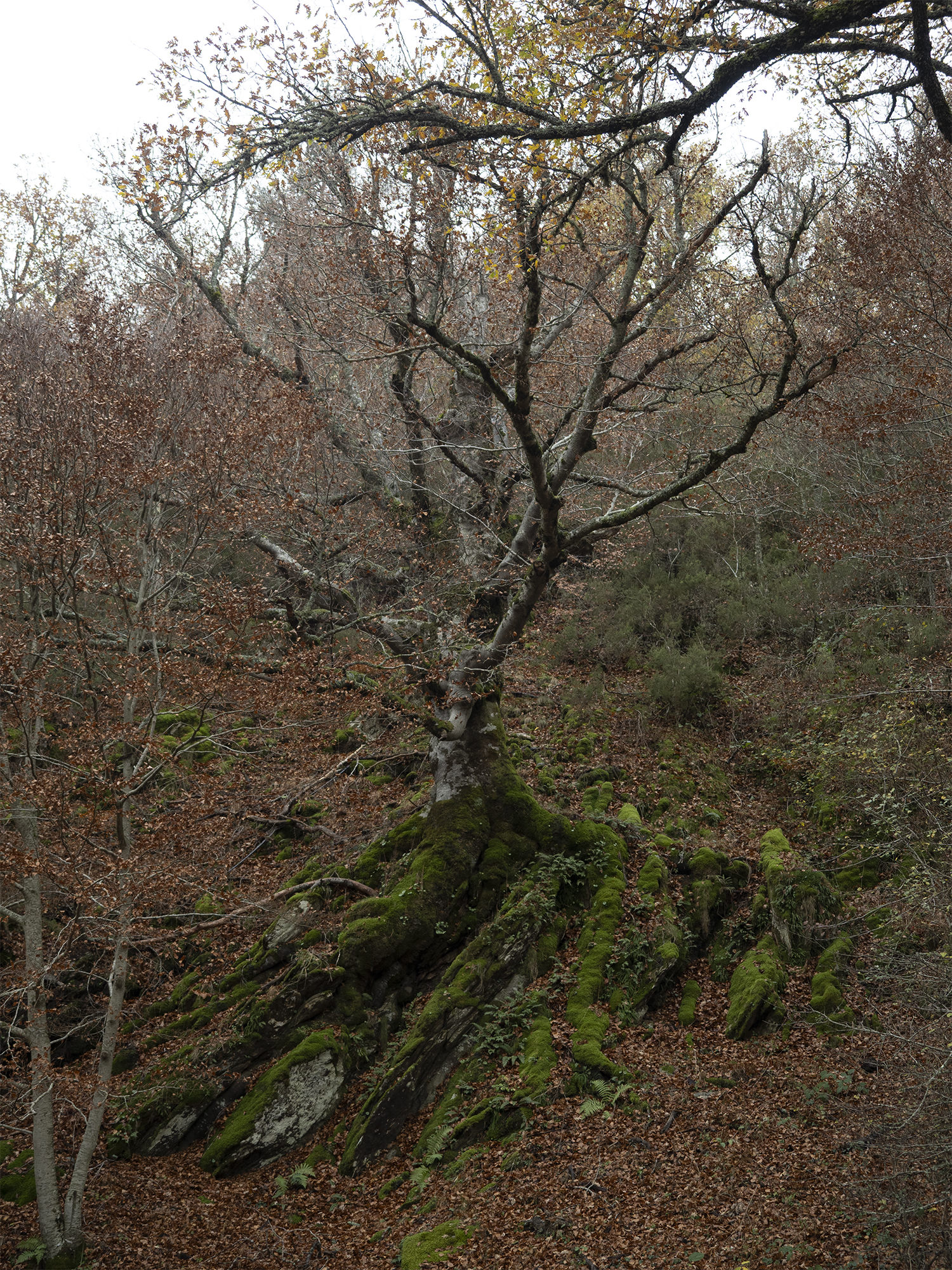
Some works focus on individual specimens and their altered morphologies; others expand the same logic into the landscape, suggesting that adaptation may occur not only within a single organism, but throughout an entire ecosystem.
The boundary between observation and invention is deliberately unstable. Photography records what was found.
Image-making proposes what might follow.
New membranes, coverings and enclosures appear around vulnerable structures.
Fruits, seeds and reproductive organs develop unfamiliar architectures.
Root and vascular systems extend or reorganise to transport and distribute resources.
Colour and surface changes become visible indicators of altered biological states.
Individual transformations accumulate until the surrounding habitat itself begins to change.
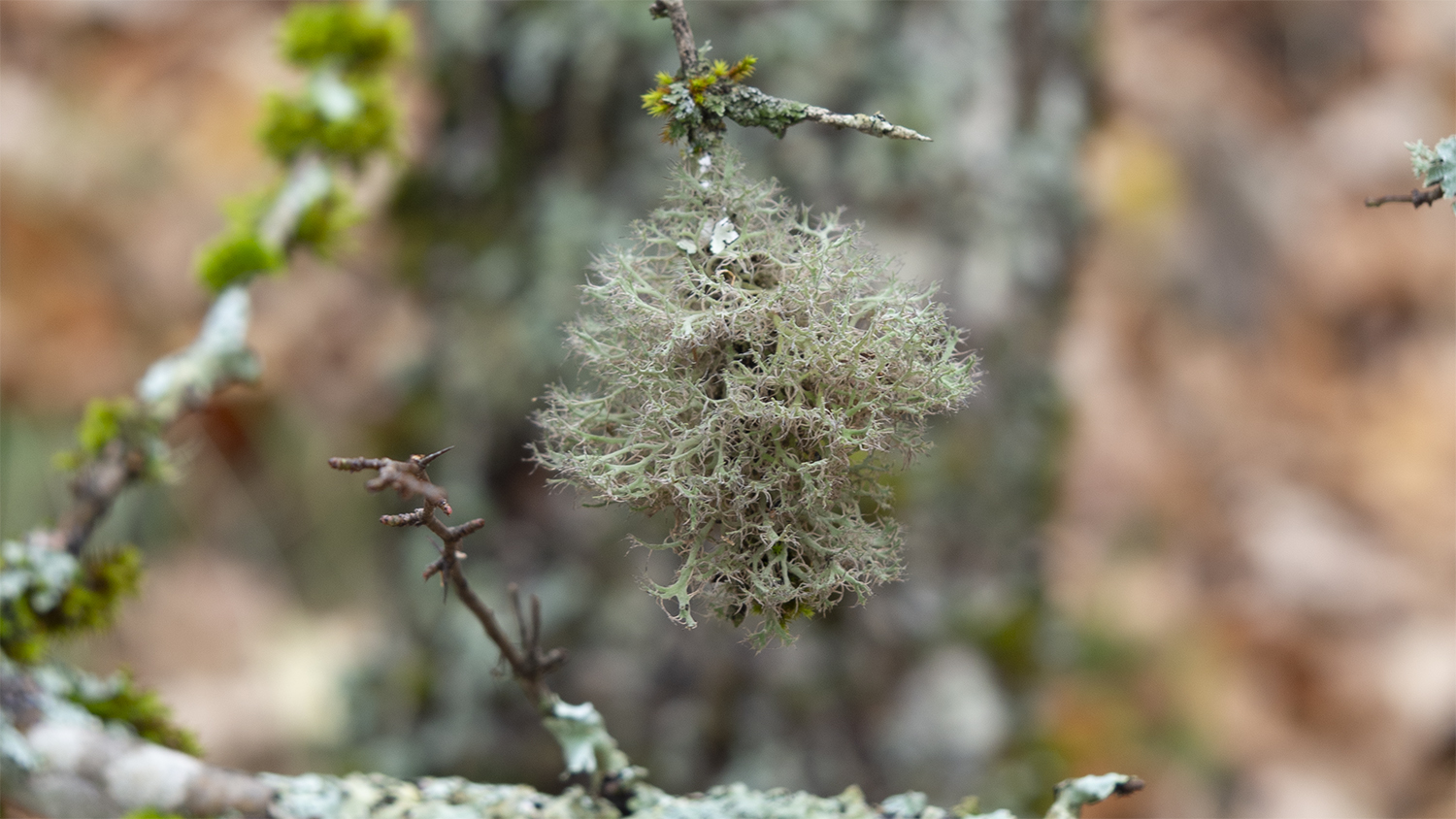
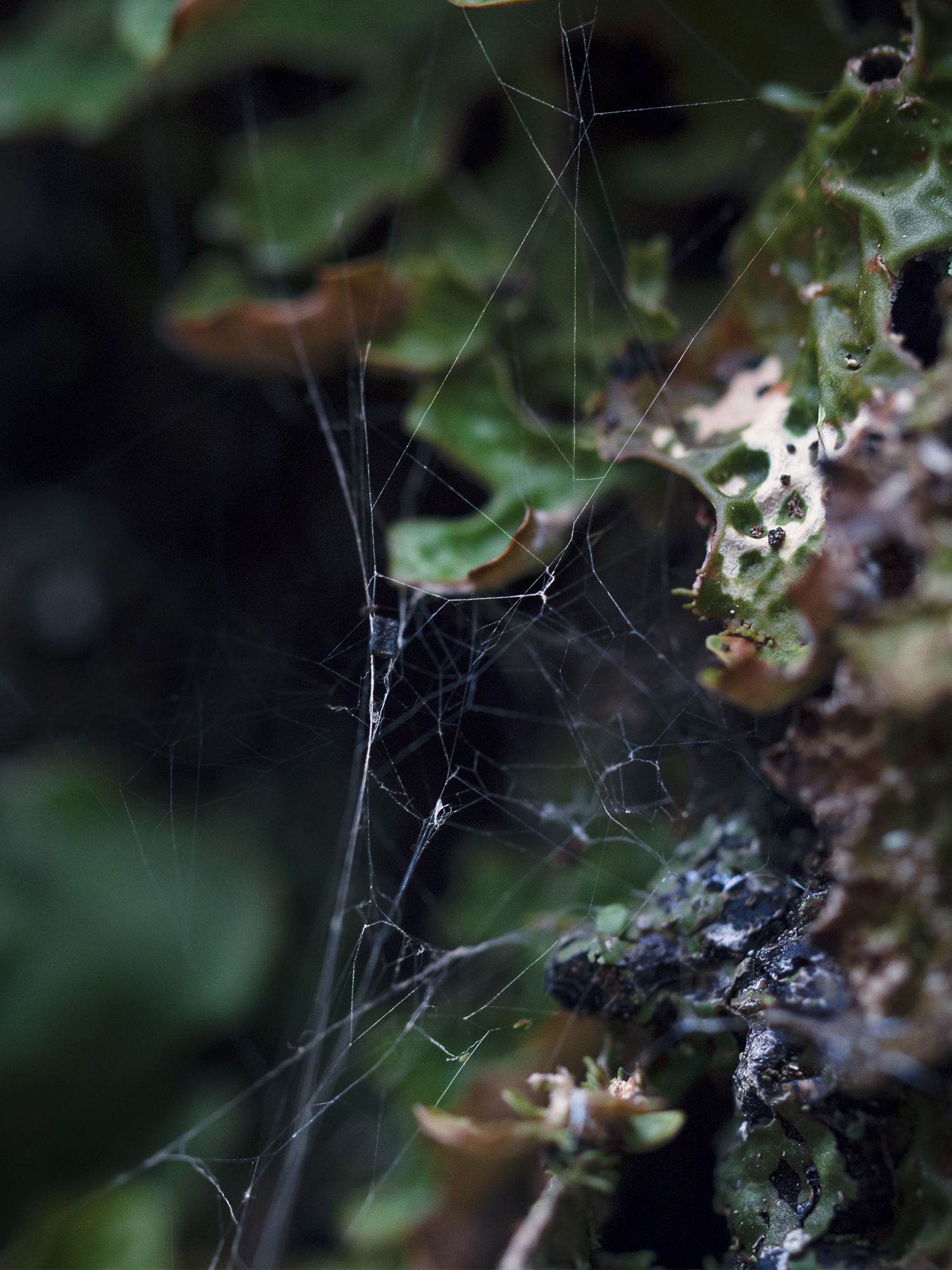
Every work begins with a photograph made in the natural environment.
The original image is then treated as raw visual material rather than as a finished photographic document. Through Photoshop, photographed elements are isolated, reconstructed, repeated, merged and transformed until a new morphology begins to emerge.
The aim is not to erase the photographic origin, but to maintain enough visual evidence of reality for the fictional adaptation to remain plausible.
Original photograph → digital construction → compositing and integration → final morphology


Not new species, but new possibilities.
The organisms represented in Survival Morphologies do not correspond to actual scientific species.
They belong to a speculative visual system informed by real biological behaviours and by the human impulse to observe, classify and explain the natural world.
Alongside the finished images, field notes, slides and classification sheets extend the project into a fictional research archive in which certainty gradually gives way to hypothesis.
COMPOSITING
Layered image construction combining photographic fragments, textures and altered forms to build each speculative morphology.

GENERATIVE IMAGE-MAKING
Generative tools are used selectively to test, extend and develop structures that are later refined and integrated in Photoshop.

FIELD OBSERVATION
Every image begins with material photographed in real forests: plants, fungi, roots, lichens, water and other natural forms.
ADAPTIVE SYSTEMS
Each transformation proposes a possible survival response: protection, storage, signalling, reproduction or environmental adjustment.

SPECULATIVE TAXONOMY
The works are organised as an imagined field archive, using plates, notes and classifications to document forms that do not belong to any existing species.

MORPHOLOGICAL CHANGE
The project considers survival as a process of structural change: life altering its appearance, organs and functions in order to persist.

New specimens, landscapes and adaptive behaviours can continue to enter the system as the project develops, allowing the imagined ecosystem to evolve alongside the environmental questions that generated it.
Survival does not necessarily preserve form. Sometimes, it produces another one.
Survival Morphologies is developed through an integrated Adobe workflow, spanning everything from field photography and visual research to compositing, generative exploration, and motion.
ADOBE CREATIVE CLOUD
INTEGRATED WORKFLOW
Photography, research, image-making, generative exploration and motion developed within a connected Adobe workflow.
ADOBE PHOTOSHOP
IMAGE CONSTRUCTION & COMPOSITING
Layered compositing, masking, retouching and structural transformation used to build the final morphologies.

ADOBE LIGHTROOM
Images selection, RAW processing, tonal balance, and color preparation of original field photographs.
ADOBE FIREFLY BOARDS
VISUAL RESEARCH & IDEATION
Used to explore biological references, visual relationships and possible adaptive structures before image construction.

ADOBE FIREFLY VIDEO
GENERATIVE MOTION EXPLORATION
Used to test how selected morphologies might emerge, evolve or transform over time.
ADOBE AFTER EFFECTS
MOTION & TEMPORAL COMPOSITION
Used to assemble and refine moving-image experiments and transitions between different morphological states.

ADOBE COLOR
CHROMATIC SYSTEM
Used to refine the magenta, violet and cyan palette that identifies altered biological states throughout the project.

Izaskun Valmaseda is a Basque photographer and visual artist based in Madrid. Her practice is rooted in fine art and conceptual photography, extending into self-portraiture, photomontage, video art, and hybrid creative processes. Her background in the performing arts shapes an image-making approach based on mise-en-scène and a precise attention to gesture, light, color, and presence.
Characterized by strong symbolic resonance, her work explores themes of identity, desire, memory, power structures, and vulnerability. Her images combine meticulous visual craftsmanship with restrained atmospheres, creating a beauty that is at once delicate and fierce, intimate and political, seductive and unsettling.
In her more recent work, photography shifts toward the object through techniques such as manual transfers, glass, precious metals, and lenticular printing. Traces, losses, and process-related accidents cease to be mere imperfections; instead, they become integral to the work’s meaning, revealing the gap between the desire to preserve an image and its inevitable transformation. In her lenticular pieces, multiple images coexist on a single surface, overlapping and dissolving without fully replacing one another—thereby challenging the notion of identity as something singular and stable.
She is a co-founder of Interludio Visual, a transdisciplinary creative and research collective that brings together artists, musicians, and scientists to develop collaborative projects involving installation, video, and spatial or sensory experiences.
She regularly collaborates with art galleries and auction houses, and her work has been exhibited in Spain, Italy, Austria, and the Netherlands. Her recent distinctions include the Adobe MAX Creativity Award (Photography | Personal), 1st Place in Conceptual Photography – Professional at the Chromatic Awards, Best Digital Artist at the Click Masters Awards, and recognition as a Featured Artist by ViewSonic ColorPro.
Survival Morphologies
© Izaskun Valmaseda
hola@izaskunvalmaseda.com
izaskunvalmaseda@gmail.com